jmgoyder

wings and things

Underneath: a poem to Anthony

Underneath the black and white tiled linoleum in the kitchen are the original tiles.
We couldn’t rip them out because of the asbestos, so we just covered them over.
The ridiculously expensive lino almost immediately developed little holes
from my high heels, your bentwood chairs and, more recently, the stab of your walking stick.
Do you remember how I invited the manufacturer’s assistant out here to get a discount on that lino, how he told me to stop wearing heels, how I told him where to go? We got the discount on the basis of a faulty product and you were proud of me for fighting for this.

Underneath the canopy of your thick eyebrows (when did they get so thick?) your eyes only twinkle occasionally now and sometimes I can’t get even get your lips to move into a smile, no matter how hard I try with my jostling words, silly antics, tear-restrained hugs.

Underneath the muteness of your nursing home bed, I lie on a soft carpet of imagination in the hope that you will have a good night’s sleep in which you forget that I am not there with you. And, while I am on this soft carpet, I will try my hardest to erase your fear of losing me because that will never happen.

Underneath the ugliness of this disease, I see the beauty of who you are, and always have been – a big caterpillar, bypassing all of the butterflies, and becoming a vivid part of the sky.

ps. So glad our son, Ming, no longer reads my blog; he would vomit -ha! Actually, if I read this to Anthony, he probably would too, so I guess this is just for myself and the blog.

47 Comments »

Dementia and Invisibility

Thanks so much for the wonderful feedback on yesterday’s draft article. I think it would be really interesting to incorporate those comments into the final draft of the article. I’d also like to add some positive aspects to the notion of dementia replay but I want to do a bit of research first. The journal I want to submit to is called Alzheimer’s Care Today.

Here is another (very rough) draft article for those who are interested. Again, any feedback appreciated.

Dementia and Invisibility

Almost every day I visit my husband, Anthony, who is in a nursing home because he has advanced Parkinson’s disease, prostate cancer and now the beginnings of dementia. Over the 18 months since he was admitted, the PD has affected his ability to speak due to his throat muscles not working properly any more, a diminished ability to concentrate and, with the associated dementia (PDD), various degrees of confusion. He has been transformed from a larger-than-life, loud, laughing, boisterous person to a mostly silent person with a very soft voice and a blank, expressionless, seemingly sullen face. And, over the last few years, he has shrunk in size by nearly 10 kilos. Once upon a time he had the most wonderful presence.

Now, he is becoming invisible.

Not to me, but to others. Let me explain. When I visit I am greeted with great friendliness by all the staff, banter is exchanged and the quietness of Anthony’s situation is enlivened. Sometimes there is a rush of conversation which is difficult for Anthony to follow because with PD comes an inability to concentrate on more than one thing at a time. For example, if he is watching the news, he is too distracted to concentrate on my scintillating anecdotes (ha!) so I turn the volume down. If I visit at the same time as someone else, the conversation often bounces around him because he can’t keep up. If he begins to say something and has difficulty with the words (this is happening a lot more often now), there is a tendency to talk over him or else finish his sentences for him instead of waiting for him to finish what he has to say. I do this myself and have to make myself shut up sometimes.

Lately I have noticed that staff will often come into his room and start talking to me, but not to him, or rush past us on their way on or off duty and yell out ‘seeya Jules!’ or ‘hiya Jules!’ but not say this to Anthony. It’s as if my visibility makes him even more invisible. Even if he is included in these salutations, by the time he responds with his own ‘hi’ or ‘bye’ the person has long gone. And he is almost never able to answer ‘how are you, Anthony?’ quickly enough, so he seems to have stopped bothering.

Don’t get me wrong; the staff are wonderful and mostly rushed off their feet. This means that conversation with Anthony (whether I am there or not) is often limited to ‘lunch time, Anthony, up we get’, ‘do you need to go to the toilet?’ ‘bedtime, here’s the bell if you need us’, ‘here’s your 4 o’clock pill – have you swallowed it?’ and so on. When I am there I try to enable conversations between Anthony and the staff in all sorts of ways and this has been a lot of fun and very effective. I guess my intention here is to remind them that he is not just a person with a disease, but a person with a past, that he is a person.

Here are two of the things I have tried:

1. Pictures: I have decorated his room with pictures and photos, which I change from time to time. At the moment there is the enlarged photo of a young, robust, smiling Anthony, a photo of this farm from the late 1950s, an oil painting of cattle I commissioned for him as a Christmas present years ago, a series of photos of Ming as a baby (in the one frame), a personalized calendar my mother made with a different photo of us for each month, a photo of Anthony and me in the early days of our marriage, and a big, window-pane mirror that my brother made for him. My hope is that these visuals will not only trigger great memories for Anthony, but invite the curiosity of staff. The photo of him as a younger man has been a great success in both ways. ‘Wow, what a gorgeous hunk you are here, Anthony!’ ‘Is this your farm?’ ‘Who’s the funny-looking baby?’

2. Food: I take in home-made sticky date (now that I have become good at it), pistachios, exotic chocolates, fancy cheese and other treats and, even though these are primarily for Anthony, I share with the staff. I never realized before what a great conversation-starter food can be! ‘I’m just coming back for another chocolate! Is that okay, Anthony?’ Additionally, the chef at the nursing home makes the most divine pavlova so the other day she snuck me an extra piece for Anthony and voila, he is now recognized as the pavlova-loving patient, not just the patient.

Now, he is becoming visible again.

Of course there are many, many more ways of de-cloaking your invisible loved one if he or she is in a nursing home and these are just a couple of ideas. It is an exciting journey of discovery and beats the hell out of despair!

DSCN2070

32 Comments »

My mother’s courage

My mother has had an extraordinary year and somehow survived it. The other day, she found a diary entry. The following words are hers.

Despair.

Written in the midst of recovery and rehab after falling off my bike and two fractures in the pelvis and three in the wrist resulting in a plate. Three and a half weeks in hospital and six weeks with home care after returning home.

Added to this was the possibility of failing eyesight, when my second eye was diagnosed with wet macular, which had taken away the sight in my left eye.

I wrote:

Can I find a way to meet this new challenge, this extra disability. For yes. I am disabled. I hear perhaps 10% of conversation, lectures, discourse, chat, and now, my eyesight too, is dim.

My world, once sharp and clear and vibrant with song, and colour and clarity, is muted, damped down, edges dulled, disintegrating. I can’t remember what it was to step out, sure footed and light hearted. “Take care”, “hold rail” “look down” “the footpath’s out to get you.”

Care free. What’s that? Unthinking, devil-may-care, impulsive? Gone now, forever?

Would hiding in the safety of my home, no risk, be better than this half life?

Is the smile becoming fixed, a give away. That vacant, lost, bewildered look that usually only comes with senility.

But

Not gone in mind, though sight and sound have left me early, far too soon.

I must decide. These storms of sorrow washing over me to drown my essence. Can I push up the trapdoor of this thing that threatens me. Have I the strength or will to fight the demon of despair .

Count what you have, not what you’ve lost. You know that others have lost more. Yes. Much, much more.

What should I change? How do I embrace and prosper?

Look in, look out, look up, look here.

The things I used to do so well, now cause me anguish. What substitutes? What gifts and visions unexplored?

Show me O God, what plan you are enfolding. The years ahead must hold a treasure true, as yet uncovered and unseen, for grief and loss has hidden you from me.

Meg

2013.

56 Comments »

This is what happens when I leave the back veranda door open!

I just left it open for a minute while I fetched some groceries from the car.

IMG_2718
IMG_2719
IMG_2720

Guess who!

48 Comments »

Shooting bunnies

When I was a kid, we used an expression, “shooting a bunny” if anyone broke wind. I’m not quite sure where that expression comes from but my youngest brother still says it!

Well, so far I haven’t had the heart to shoot the bunnies and this is one of the reasons why.

IMG_2714

They are kind of cute!

20 Comments »

Parkinson’s disease and (un)predictability

Unpredictability

There are many things about Parkinson’s Disease (or Parkinsonism as Anthony’s condition is described) that are unpredictable, especially when, in advanced stages, Dementia begins to insinuate itself into the situation. For example, the other night I rang Ants at the usual time of 7pm to say goodnight and he was lucid and loving and asked when I would be in the following day, then last night a nurse rang me and put Ants on the phone and he was terribly confused and didn’t know where he was. And I have heard, from him and from nurses, that at bed time he can become aggressive. Sometimes, when I am unable to get through to him (he is finding the phone increasingly difficult to operate), I’m actually strangely relieved, but mostly I need to say goodnight just to make sure he is okay and to tell him I love him, and hear him say the same. Whenever he is distressed, I find it nearly unbearable as he is a half hour’s drive away, so I can’t just pop in.

Predictability

Anthony takes a lot of medication but the two times of day I notice the urgency of timing are 11am and 4pm. For example this afternoon, I picked him up from the nursing lodge after lunch so that he could accompany me on a few errands. I hate doing this boring stuff by myself and he loves helping me even though he has to sit in the car while I jump in and out at shops, the bank, butcher, post office etc. Now, even though today I was given the 4pm tablet in case we were still out and about, by 3.30pm I could see I would need to save a couple of the errands for the next day or it would be impossible to get Ants from the car into his room. Why? Because he freezes. ‘Freezing’ is a PD term for when the person’s body freezes into stillness, making it nearly impossible to walk, talk etc. Almost without exception, this begins to happen to Anthony at 3.30 so that by the time he has his meds at 4pm he is frozen, but by 4.30 he is again able to move.

The unpredictable stuff makes planning very difficult but the predictable stuff allows me to time visits and outings. It is such a complicated disease.

32 Comments »

Gutsy9, the teenage peacock

IMG_2689
IMG_2698

33 Comments »

Grief Intelligence: A Primer

Vic's Final Journey

540679_397961433626624_1721018618_n

For the past 25 years, I have worked with thousands of grievers. I have sat with widows and widowers, the young and the old. I have offered tissues to bereaved parents in their inconsolable grief. I have normalized, educated, listened to and championed those grievers who, through tremendous pain, still engaged with life.

In the decades since my book Transcending Loss was published, the grieving process has not changed. As I interact with grievers from around the world, I am reminded of the universality of grief. And though each person has their own journey, still they share many common experiences.

Yet, still, I see and hear so much misinformation and confusion around grief. Principally, this comes from the widely-held myths that grief should be easy, that grief should be short, that grief has closure, that people should get on with their lives unchanged and that ongoing connection with the deceased…

View original post 907 more words

14 Comments »

Carpet

IMG_2694

37 Comments »

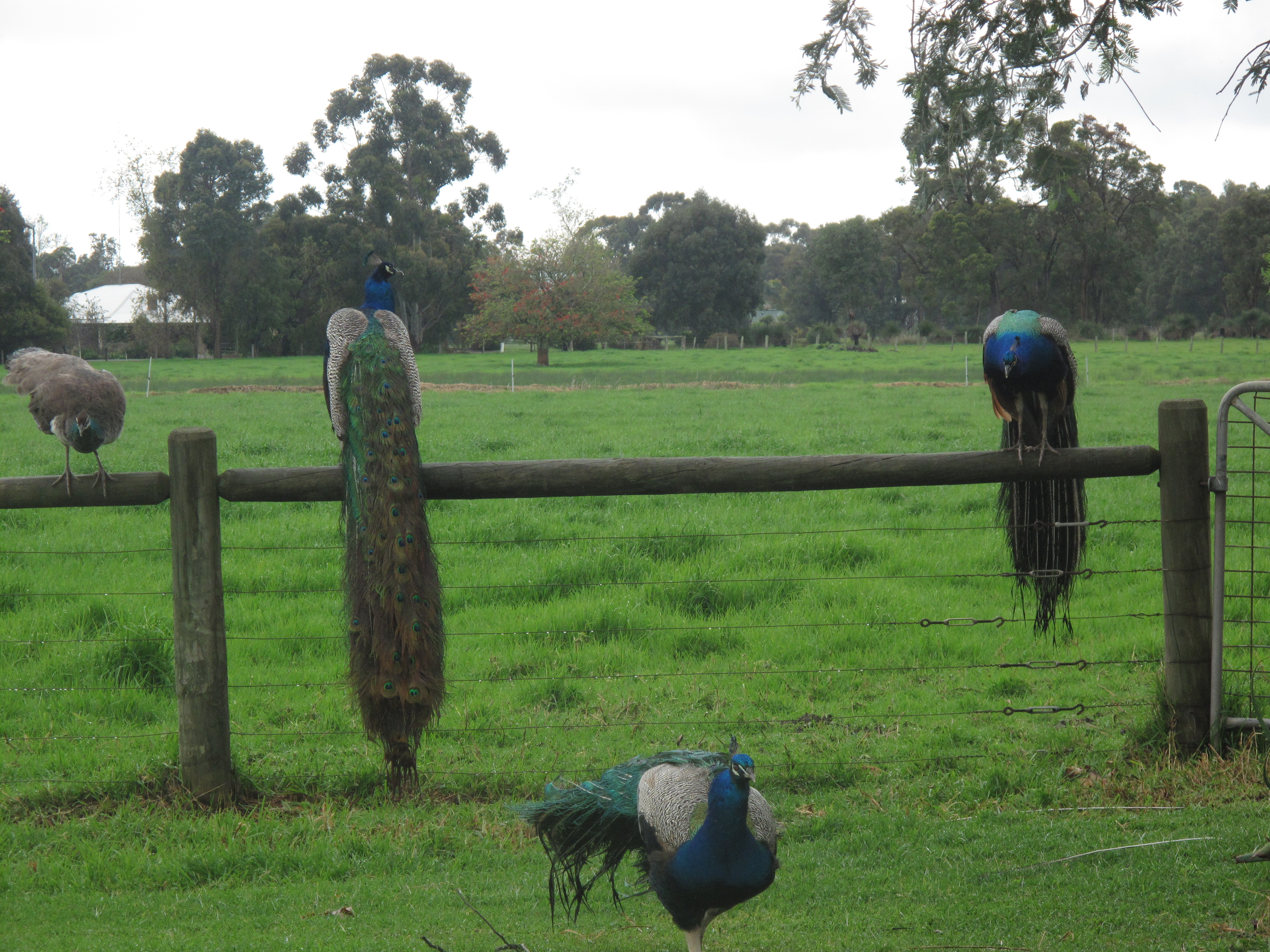
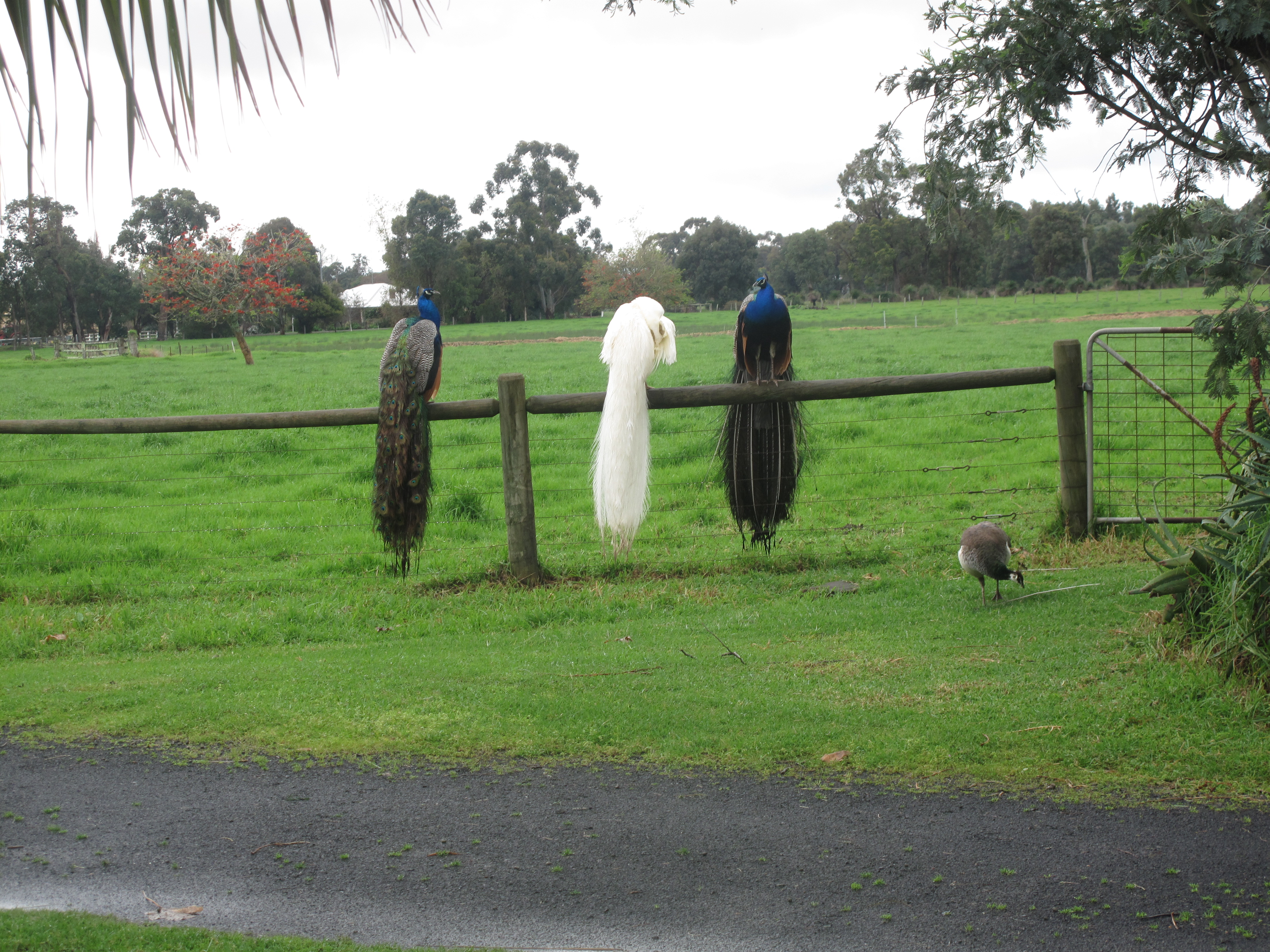
On the fence

IMG_2683
IMG_2682
IMG_2684
IMG_2691
IMG_2687

44 Comments »